
Alicante – guide for property buyers on the Costa Blanca
Alicante is the provincial capital and the largest city of the Costa Blanca, home to about 359,000 people. Alicante-Elche airport lies only about 10 km from the centre, and the city combines the life of a port and university city with a beach right in the centre. The University of Alicante operates in the city and, together with the campus in neighbouring San Vicente del Raspeig, has more than 25,000 students, and the urban area together with Elche exceeds 800,000 inhabitants.
Climate and location
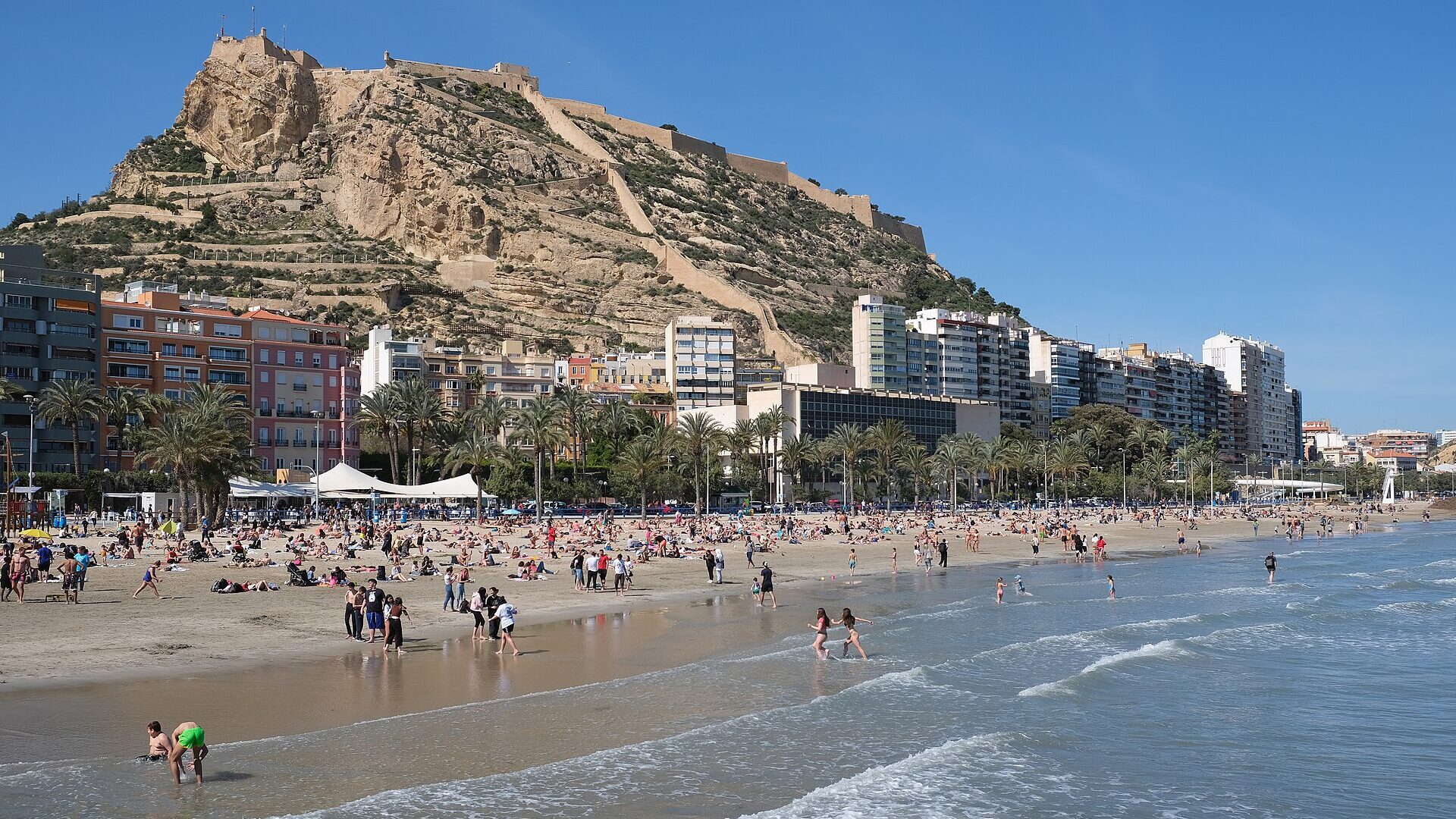
The climate is semi-arid: the average annual temperature is about 18.5°C and the sun shines for about 3,000 hours a year – it is one of the driest cities in Europe. The city beach Playa del Postiguet lies right next to the old town. According to the 1991–2020 climate normals, the sun shines in Alicante for about 3,014 hours a year and rainfall is about 285 mm, with the most rain in September and October. The average daily maximum temperature is about 17°C in January and 31°C in August. The sea averages about 14°C in winter and 26°C in August. Along the city’s coast lie the beaches of San Juan, La Almadraba, Albufereta, Postiguet, Agua Amarga and El Saladar.

What to see
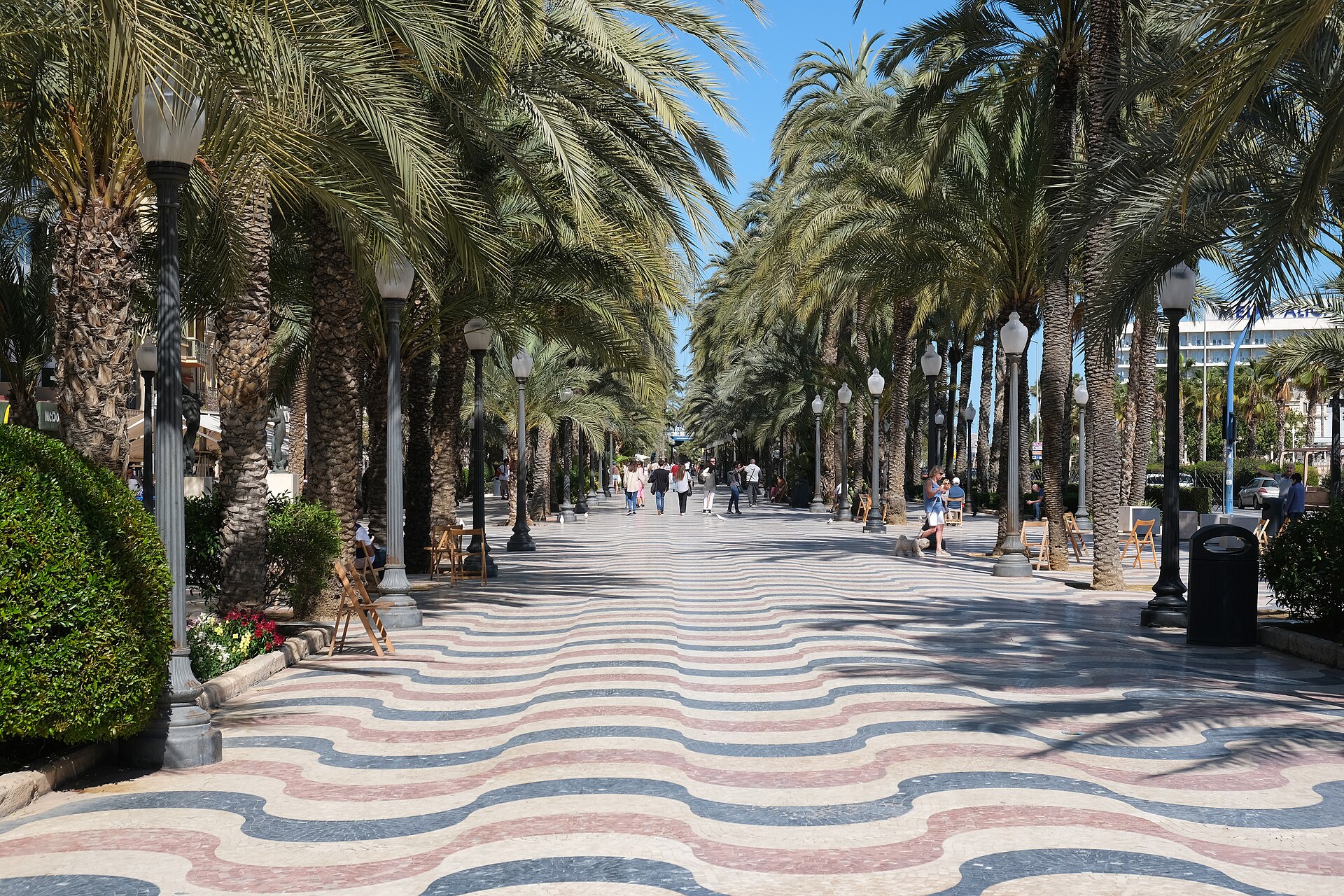
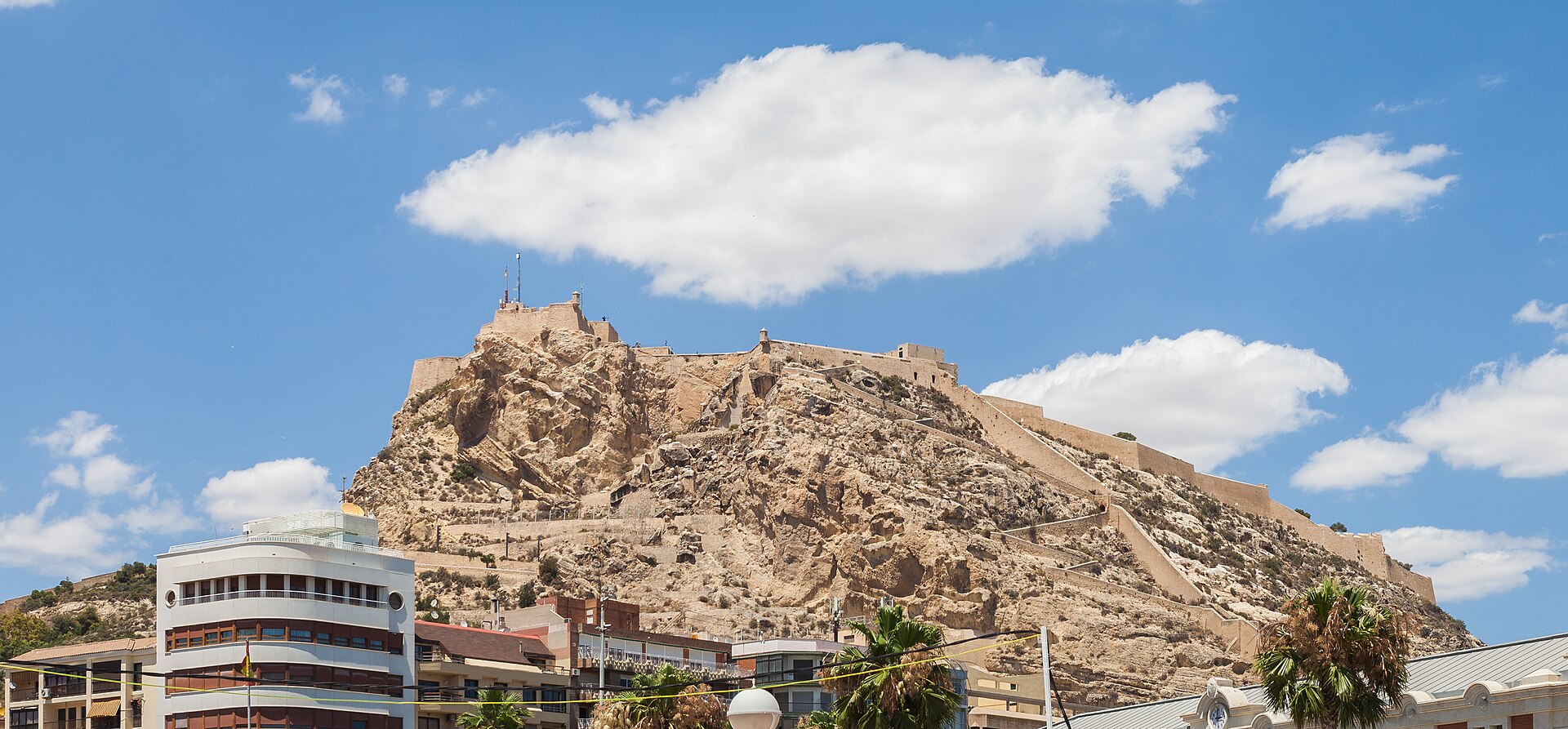
Santa Bárbara Castle on Benacantil hill with views of the city and the sea, the palm-lined Explanada de España promenade paved with a patterned mosaic, the colourful Barrio de la Santa Cruz district and the MARQ Archaeological Museum (European Museum of the Year 2004). Boats to the island of Tabarca depart from the port, and on the night of 23 to 24 June the Hogueras de San Juan festival takes place. Benacantil hill, on which Santa Bárbara Castle stands, is 169 m high. The Explanada de España promenade is paved with about 6.5 million marble tiles laid in a wavy pattern. The MARQ archaeological museum received the European Museum of the Year award in 2004, and the city also has the Museo de Bellas Artes Gravina. The Mercado Central building was constructed in 1915–1922 and combines eclectic elements with Valencian modernism. The Hogueras de San Juan take place in June: the monuments are erected on 14–20 June and burned on the night of 24 June after a fireworks display.
Getting there and transport
Alicante-Elche airport lies about 8 km south-west of the centre, in the municipality of Elche. In 2024 it handled more than 18.3 million passengers and is the fifth-busiest airport in Spain. It has no railway or tram station, so access is by road.
AVE high-speed trains have reached the Alicante-Terminal station since 18 June 2013. Regional trains connect the city with Valencia and Murcia, and the Cercanías C-1 line runs to Elche and Murcia. The metropolitan TRAM goes from the centre (Luceros) to Benidorm, El Campello, San Vicente del Raspeig and Playa de San Juan.
Districts and beaches
The most populous districts are Playa de San Juan (about 28,000 inhabitants according to 2023 city data) and Carolinas Altas (about 19,700). Playa de San Juan, north of the centre, is the centre of summer social life and nightlife.
Playa del Postiguet is the city beach by the old town. Further north lie Albufereta and San Juan, and to the south Agua Amarga and El Saladar. The island of Tabarca is about 22 km from the city; it is the only inhabited island in the region, and protected posidonia meadows grow around it.
Who Alicante is for
It is a city for people who value the infrastructure of a large centre: port, university, AVE station and airport. According to Wikipedia about 27% of residents were born abroad, which points to a large international community. However, be prepared for a hot August, humidity and autumn downpours. In summer, and especially in June during the Hogueras, the centre and the areas around the beaches can be crowded.
How a purchase works step by step
It is worth starting a purchase in Alicante with a reconnaissance trip, which lets you check the districts, access and noise in the area. After choosing a property a reservation agreement is signed, and in the following days the buyer obtains an NIE number and opens an account with a Spanish bank. The parties then sign a preliminary contract with a deposit (arras). For off-plan flats from a developer, payments during construction are usually spread over stages, and the whole process ends with the notarial deed and entry in the registry. No commission is charged to the buyer when buying with us; we described all the costs in the guide to costs and taxes in Spain.
Property in Alicante
Alicante offers apartments in the centre, close to the beaches and the port, and new developments on the outskirts. See current apartments in Alicante and houses in Alicante — no commission is charged to the buyer with us.
World Residence offers in the province of Alicante
Our current offer in Alicante itself includes, among others, a new flat with a terrace and a rooftop pool for about €269k. In the area you will also find offers in Gran Alacant (from about €399k), Villajoyosa (from about €368k), La Mata (from about €295k) and Guardamar del Segura (from about €222k). Looking for another offer in Alicante or the area? Write to us and we will check what we can propose. When buying with our help you pay no commission.
The city of Alicante works well for people who want to live close to the airport (about 10 km) and the beach and use urban infrastructure all year round. If a new build with a pool in a calmer area matters to you, Gran Alacant or Villajoyosa are the more common choices.
See also our guides to nearby towns: El Campello, Arenales del Sol, Gran Alacant, Santa Pola. You will find all locations on the World Residence favourite locations page.
Frequently asked questions
How far is Alicante from the airport?
Alicante-Elche airport is about 10 km from the centre of Alicante, i.e. usually about a dozen minutes by car.
What costs should you add when buying property in Alicante?
Alicante is in the Valencian Community: ITP tax on a resale purchase is about 10% (9% below €1 million from June 2026). For new properties you pay 10% VAT and 1–1.5% AJD tax. Including the notary and the registry, costs are usually about 12% (resale) or 12–14% (new).
Is it worth buying property to rent out in Alicante?
Alicante has tourist and student traffic, so rental demand is stable. Short-term rental requires registration, and the homeowners’ association or the municipality may introduce restrictions – we check this before the purchase.
How do you get to Alicante from Madrid?
Since 2013 AVE trains have run to the Alicante-Terminal station. The station is close to the city centre, and from there you can change to Cercanías or a bus.
When do the Hogueras de San Juan take place?
The festival takes place in June: the monuments are erected on 14–20 June and burned on the night of 24 June. The festival has the status of a Festival of International Tourist Interest.
Is there a tram in Alicante?
Yes. The metropolitan TRAM connects the centre with Benidorm, El Campello, San Vicente del Raspeig and Playa de San Juan. It does not, however, reach the airport.
Last updated: 15 October 2026.