
Calpe – guide for property buyers on the Costa Blanca

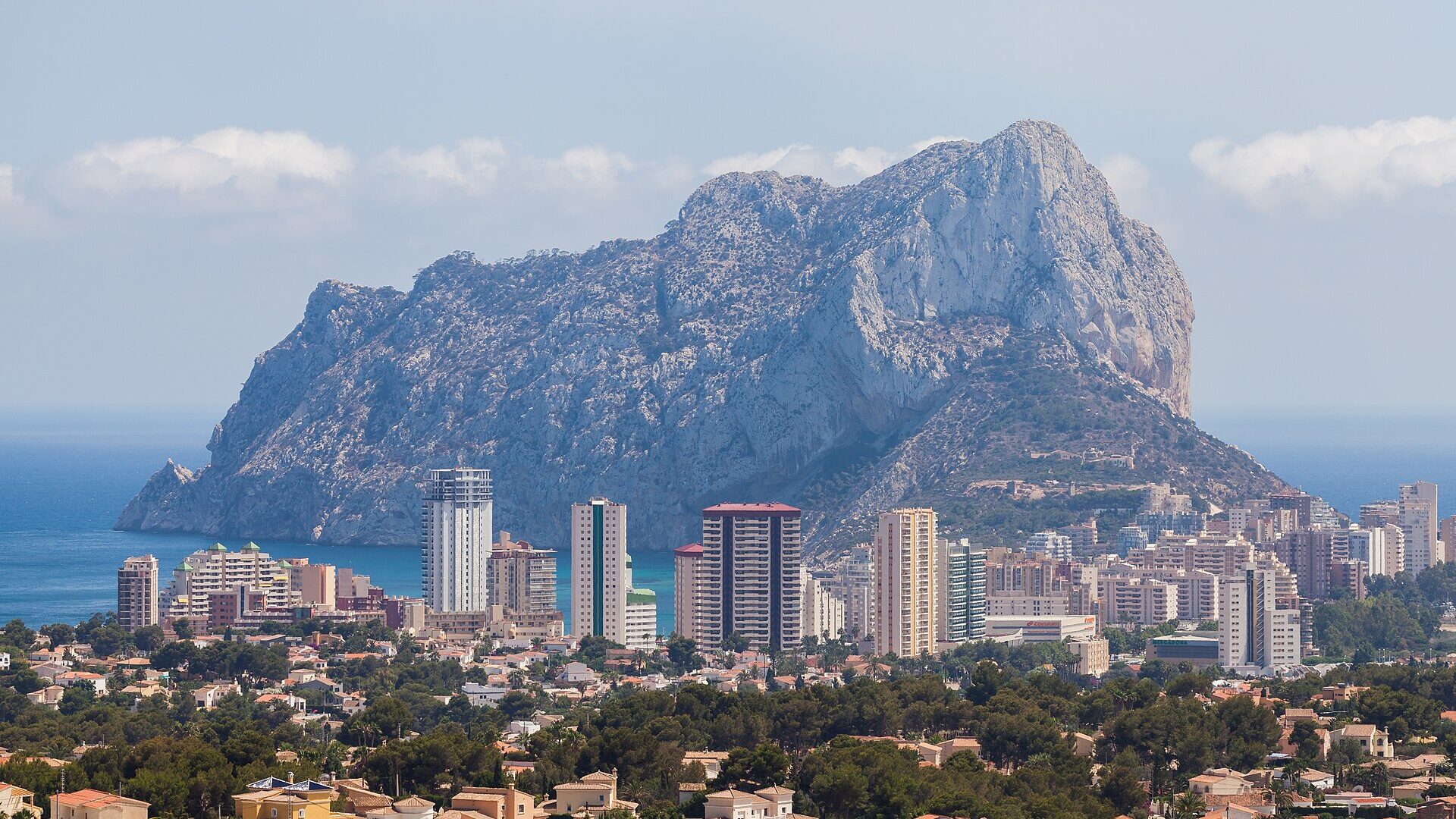
Calpe (Spanish: Calp) is a seaside town in the province of Alicante (Costa Blanca), home to about 26,800 people (INE, 1 January 2024), around 70 km from Alicante-Elche airport. It is known for the Peñón de Ifach rock, beautiful beaches and water sports. The municipality covers about 23.5 km², and its official name in Valencian is Calp – this is how you will see it on road signs and in documents.
Location and life
Calpe’s economy is based mainly on tourism and fishing. The town has a port, beaches and the mild climate typical of the Costa Blanca, so life goes on here all year round. Calpe lies in the Marina Alta comarca, on the northern coast of the province of Alicante. The climate is Mediterranean, but heavy storms occur in the region, mainly in summer and autumn – when viewing properties, ask about the condition of the roof, terraces and rainwater drainage.
What to see
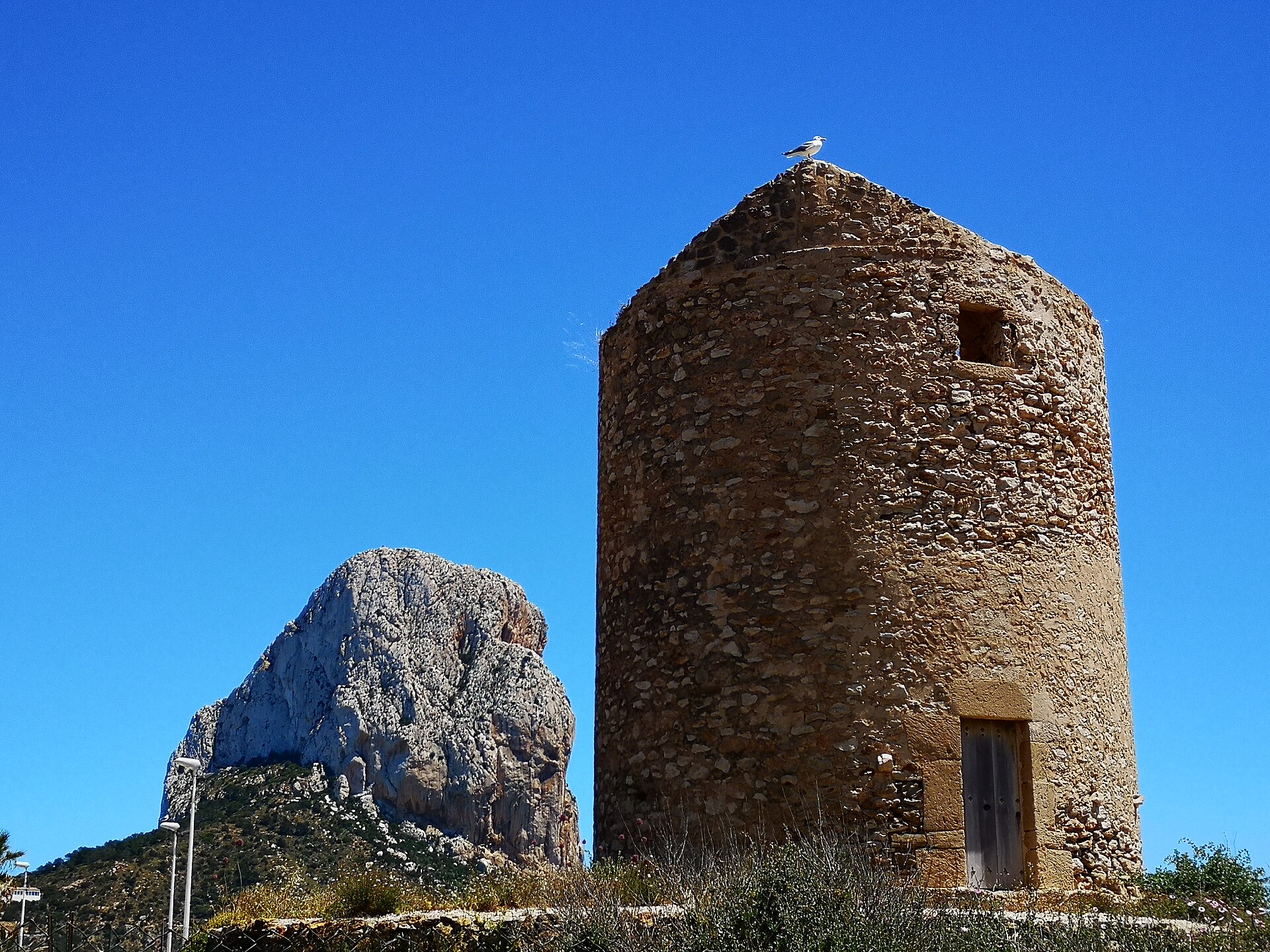
The Penyal d’Ifac Nature Park with the iconic Peñón de Ifach rock, the ruins of Els Banys de la Reina (the “Queen’s Baths”), flooded salt pans that serve as a migratory bird reserve, a Gothic church and the 18th-century La Peça tower. Penyal d’Ifac is 332 m high and has been a nature park since 1987. The trail to the summit is about 4.6 km long, leads through a tunnel in the rock, and fixed ropes help on the final stretch. Entry requires an online reservation, because the daily number of people is limited (check the current rules on the park’s website). Peregrine falcons, among others, nest on the cliffs. Above the bay, on a hill, stands the Ermita del Salvador, and in the old part of the town the parish of Nuestra Señora de las Nieves, next to which is the Gothic-Mudéjar Old Church.
What living here is like
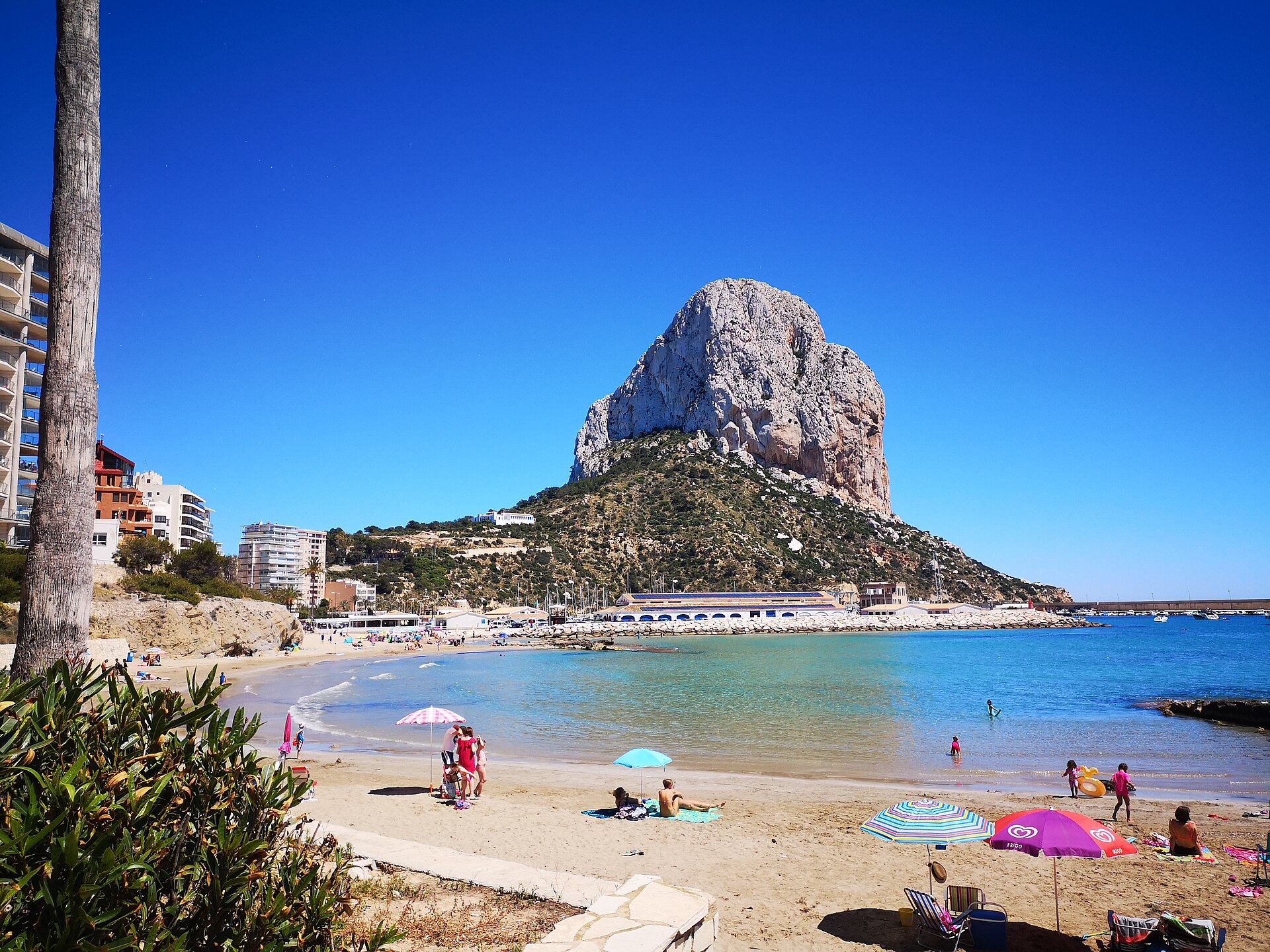
Calpe is a year-round town, with a fishing port and a lively old town, not just a summer resort. The Peñón de Ifach rock rises from the sea between two beaches: the long, sandy Arenal-Bol next to the old town and La Fossa (Levante). The market and restaurants operate in winter too, and it is about a 40-minute drive to Alicante airport. Expect narrow streets in the old town and the port, and more difficult parking.
Getting there and transport
Alicante-Elche airport has no railway station of its own and handled about 18.4 million passengers in 2024. From there you can reach Calpe by car or long-distance bus.
City buses L1 and L2 run in the town, and Calpe is also served by line 9 of the TRAM d’Alacant (Benidorm–Dénia). Check the current FGV timetable before travelling.
Beaches and port
The main beaches are Arenal-Bol in the centre and La Fossa (Levante) north of the rock – each has about 2,000 m of fine sand. By the fishing port lies the short Cantal Roig beach (about 200 m), and behind the rock the rocky cove of Cala el Racó (about 70 m), accessible through the fishing port. Yachts moor, among other places, in the Puerto Blanco marina and at the Club Náutico Les Basetes.
Who Calpe is for
Calpe suits you if you want a beach, a port and shops within walking distance. However, it is worth knowing the downsides too.
- Pros: a compact town, beaches and services close together, life all year round.
- Cons: an economy based mainly on tourism, so it can be more crowded in summer, and the small area of the municipality means houses with large plots are less common than in larger municipalities.
Tradition and festivals
In the past, Calpe’s economy was based on farming (almonds, raisins, carob), fishing and salt, and tourism developed from the 1960s. Among the local festivals, Fallas in March, St John’s Eve on 23 June and Moros y Cristianos in honour of the Santísimo Cristo del Sudor (22–25 October) stand out.
How a purchase works step by step
A purchase in Calpe follows the scheme that applies throughout Spain:
- Reconnaissance – a viewing trip on the spot: views, aspect, distance to the beach and to the Peñón de Ifach.
- Reservation agreement – payment of the reservation deposit, which takes the property off the market.
- NIE and bank account – the application (form EX-15) is submitted at the police in Spain or at a Spanish consulate; you also need an account with a Spanish bank.
- Checking the property – on the resale market a nota simple from the Property Registry (owner, encumbrances).
- Preliminary contract with a deposit (arras) – agreeing the price and deadlines.
- Notarial deed and entry in the registry after the taxes are paid.
No commission is charged to the buyer when buying with us. We described the costs in the guide to costs and taxes in Spain.
Costs and commission
We set out the tax and fee rates in a separate guide to costs and taxes in Spain. We recommend an independent lawyer, and when buying with World Residence no commission is charged to the buyer.
Property in Calpe
In Calpe you will find apartments close to the beach and the port and houses and villas with a view of the sea or the rock. See current apartments on the Costa Blanca and houses on the Costa Blanca — no commission is charged to the buyer with us.
World Residence offers in Calpe
Our current offer in Calpe includes apartments at prices from about €380k. Looking for something specific, for example within a given budget or close to the beach? Write to us and we will check what we can propose. When buying with our help you pay no commission.
See also our guides to nearby towns: Moraira, Cumbre del Sol, Altea, El Albir. You will find all locations on the World Residence favourite locations page.
Frequently asked questions
How far is Calpe from the airport?
Calpe is about 70 km from Alicante-Elche airport.
What costs should you add when buying in Calpe?
The same as throughout the Valencian Community: on the resale market ITP tax is about 10% (9% for properties below €1 million from June 2026), for new developments you pay 10% VAT plus 1–1.5% AJD tax. With all fees this is usually about 12–14% of the price.
Is Calpe suitable for holiday rental?
The beaches, port, nature park and water sports attract tourists, but profitability depends on the location and the season; it is worth checking whether a tourist licence is required.
Can you climb Penyal d’Ifac without a reservation?
Entry requires a prior online reservation, because the daily number of visitors is limited. The trail is about 4.6 km long and becomes harder beyond the tunnel, so it is not recommended for small children. Check the current rules on the park’s website.
Can you live in Calpe without a car?
Partly, within the town itself: buses L1 and L2 run, and the town is served by TRAM line 9. You can reach the airport by long-distance bus, but it is worth checking timetables in advance.
What is Calpe called in Valencian?
The official name in Valencian is Calp. Two languages are official in the Comunidad Valenciana: Spanish and Valencian.
Last updated: 15 October 2026.